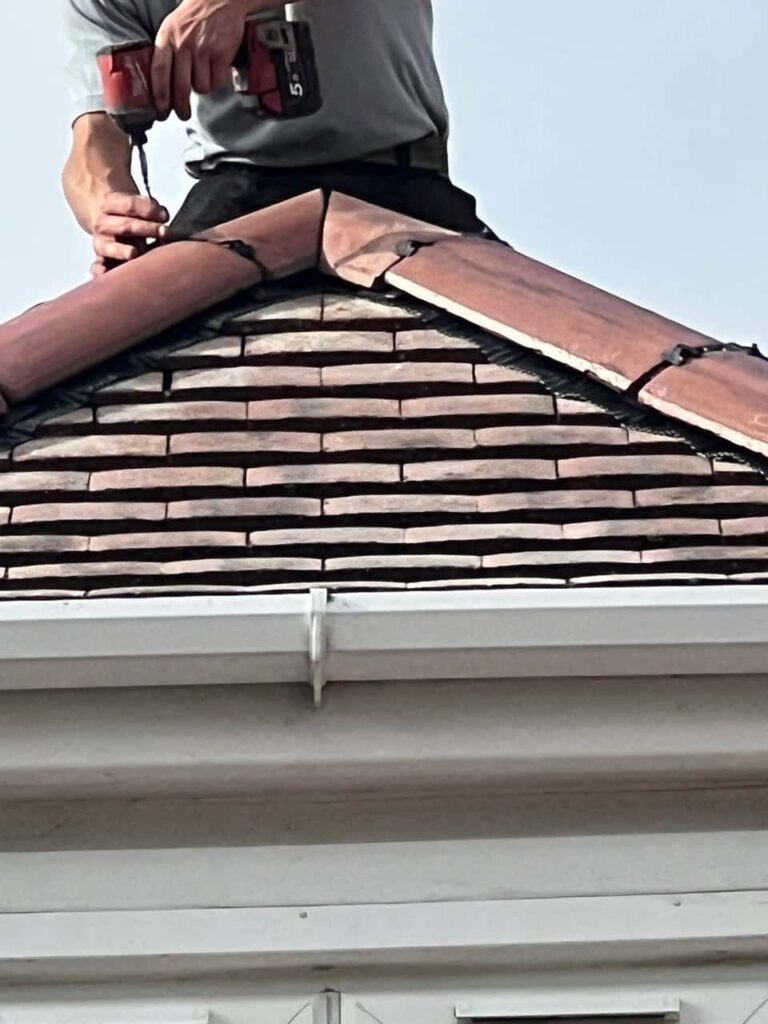
A roof can be affected by strong wind even when no tiles are visibly missing and no immediate leak appears indoors. Wind pressure can lift the edges of tiles, weaken fixings and disturb vulnerable roof details without leaving obvious damage when viewed from ground level.
For property owners in Selby, North Yorkshire, checking the roof after severe weather can help identify movement before further wind or rainfall turns a concealed weakness into a more serious defect.
How Strong Wind Can Affect a Roof Without Obvious Signs
Wind does not press evenly against a roof. It flows across the surface and creates uplift around exposed edges, corners, ridges and changes in roof shape. Tiles and other components may move slightly before settling back into a position that appears normal.
Although the covering may still look complete, fixings or materials underneath could have been weakened.
Roof Tiles Can Lift and Settle Back Down
A tile does not need to fall from the roof to be affected by wind. Strong gusts can lift its lower edge, placing strain on the nail, clip or nib holding it in place.
The tile may settle back afterwards but no longer be as secure as it was previously. During another period of poor weather, it could move further, slip out of alignment or expose the underlay.
This type of movement can be difficult to identify without a close inspection.
Fixings May Become Loose or Damaged
Roof tile fixings deteriorate gradually and may already be weakened before strong winds occur. Corroded nails, damaged clips and worn tile nibs can become less effective when placed under sudden uplift.
A tile may remain in approximately the correct position even though its fixing has failed. It could rattle during windy conditions or shift slightly without producing an obvious gap.
Checking the fixings and surrounding tiles helps determine whether the roof covering remains properly secured.
Hairline Cracks May Not Be Visible From Below
Tiles and slates can develop fine cracks after movement or impact. These cracks may be too small to see from the ground but can still allow moisture to enter.
Rainwater may pass through the damaged material slowly or only when driven by wind. The underlay can temporarily prevent an internal leak, making the problem seem less significant than it is.
A close inspection can reveal damage that an ordinary ground-level view may miss.
Ridge and Verge Details Can Be Disturbed
Ridges and verges are exposed parts of a roof and can experience considerable wind pressure. Strong gusts may loosen tiles, crack mortar or disturb mechanical fixings.
Early warning signs can include:
- Small pieces of mortar on the ground
- New gaps around ridge or verge tiles
- Sections appearing uneven
- Rattling noises during windy weather
- Loose material within the guttering
- Dampness appearing near the edge of the roof
These changes should be checked before more material becomes displaced.
Flashing Can Lift at the Edges
Lead flashing and other weatherproofing details protect the junctions around chimneys, walls and roof penetrations. Wind can lift an exposed edge or widen an existing gap.
The movement may be slight and difficult to see, yet it can allow wind-driven rain to pass behind the flashing. Because water can travel along nearby surfaces, the eventual damp patch may appear some distance from the defective junction.
The Underlay May Have Been Placed Under Strain
Wind entering through a small opening can cause the underlay beneath the roof covering to move or flap. Older material may tear around fixings or separate where it has already become brittle.
The tiles above can conceal this damage completely. If the underlay no longer provides effective secondary protection, a later tile defect may allow water to reach the roof space more easily.
Gutters and Roofline Components Can Also Move
Strong wind may affect more than the main roof covering. Gutters, fascia boards and soffits can loosen, particularly where fixings have deteriorated.
A gutter that has shifted may no longer drain correctly, allowing rainwater to overflow against the building. Loose roofline components can also expose edges that were previously protected.
A post-storm inspection should therefore consider the entire roofline.
Warning Signs to Look For After Strong Winds
From ground level, homeowners can watch for signs such as:
- Tiles that appear uneven or slightly raised
- New gaps in the roof covering
- Debris in the garden or guttering
- Rattling or tapping sounds
- Loose guttering or roofline sections
- Fresh ceiling marks after rainfall
- Damp smells in the roof space
- Water entering during wind-driven rain
Do not climb onto the roof to investigate. Even a roof that appears dry can contain loose or unstable materials.
Why a Leak May Not Appear Immediately
An affected roof may remain dry during light, vertical rainfall but leak when rain is driven towards a loosened tile or flashing detail. Insulation can also absorb small amounts of moisture before a ceiling mark becomes visible.
This delay can create the impression that the roof escaped damage. In reality, the right combination of wind direction and rainfall may simply not have occurred yet.
What a Professional Inspection Should Cover
A professional roofer should examine the areas most exposed to uplift and check for subtle movement. The inspection may include:
- Tiles, slates and their alignment
- Nails, clips and tile nibs
- Ridge and verge details
- Lead flashing and roof junctions
- Underlay and battens where accessible
- Valleys and roof penetrations
- Guttering, fascia boards and soffits
- Signs of moisture within the roof space
If the damage is localised, targeted repairs may be enough to restore the roof’s protection.
Conclusion
Strong wind can loosen a roof without leaving missing tiles or immediate water damage. Slight tile movement, weakened fixings, hairline cracks and disturbed flashing may remain hidden until another storm or period of driving rain exposes the problem.
TRP Roofing Selby provides professional roof inspections and repairs throughout Selby, North Yorkshire. If your property has recently experienced strong winds, contact us to arrange an assessment and confirm whether the roof remains secure.
Call us on: 01757 600 379
Click here to find out more about TRP Roofing Selby
Click here to complete our contact form and see how we can help with your roofing needs.